
The Ultimate Guide to Discussing Senior Living
Discussing senior living with your aging loved one can help them overcome their concerns through candid conversations and education. It can also help you work through your hesitations in the same way. However, it can be a difficult topic of conversation to broach. The initial discussion is often accompanied by powerful, reactive emotions. Nevertheless, these conversations are of critical importance. When older adults delay or dismiss senior living, it is often at the cost of their health and overall wellbeing.
Solutions like independent living, assisted living, skilled nursing, and memory care can help residents and patients make the most out of their retirement years. These solutions support them by meeting them where they are and filling in the gaps that may exist when they live life alone. A safe and supportive base layer in senior living, residents are empowered to live the retired lives they deserve. They can be the masters of their domains and live each day however they see fit.
Below is a comprehensive guide on discussing senior living with loved ones and families.
The Ultimate Guide to Discussing Senior Living
Discussing senior living with your aging loved one can help them overcome their concerns through candid conversations and education. It can also help you work through your hesitations in the same way. However, it can be a difficult topic of conversation to broach. The initial discussion is often accompanied by powerful, reactive emotions. Nevertheless, these conversations are of critical importance. When older adults delay or dismiss senior living, it is often at the cost of their health and overall wellbeing.
Solutions like independent living, assisted living, skilled nursing, and memory care can help residents and patients make the most out of their retirement years. These solutions support them by meeting them where they are and filling in the gaps that may exist when they live life alone. A safe and supportive base layer in senior living, residents are empowered to live the retired lives they deserve. They can be the masters of their domains and live each day however they see fit.
Below is a comprehensive guide on discussing senior living with loved ones and families.
Discussing Senior Living with Your Aging Loved One
Whether it is a parent, grandparent, aunt, uncle, or any other aging loved one, you want the best for them. One of the most difficult realities of aging is that most people will reach the point where additional support is needed. For millions each year, this means transitioning to some level of senior living. More difficult still, the need for senior living is often first apparent not to the person who needs it, but to someone in their orbit. Often, this person will feel obliged to bring it up, only to be met with resistance or resentment. This conflict will usually prolong the goal of moving them into senior living or prevent it altogether.
Below are some valuable tips on discussing senior living with your aging loved one.

Do Your Research First
For many people, the concept of senior living can at first feel abstract. In many cases, the only familiarity they have is with representations in film and television, which are often unflattering. There are many different levels of care available in a modern senior living community with vibrant and lively lifestyles. The first step is to find which care might be right for them.
An important note: Regardless of which level a person may need right now, it is important to select a senior living community or organization that offers multiple options so that if their needs change, they do not need to be uprooted again. Continuing care retirement communities, or CCRCs, provide just that – an ecosystem of lifestyle and care levels that allow a person to seamlessly transition to a new level of support while remaining in the comfort and familiarity of their current environment.

INDEPENDENT LIVING
Independent living allows the individual to continue living at the same level of independence they enjoy in their own home, but with a few important caveats. First, it removes the burdens of home maintenance and upkeep, both of which become increasingly difficult with age, especially for those living alone. Second, it eliminates the risk of social isolation, a common problem for seniors and one which can have negative effects on their mental and emotional wellbeing.

ASSISTED LIVING
Similar to independent living, assisted living is designed for those who have come to require an additional level of assistance with mobility or the activities of daily living, such as eating, dressing, bathing and hygiene. They still enjoy a high autonomy in life but can also rely on additional support depending on their needs. It also means that there will be a staff member on hand in the event of an injury or emergency.

MEMORY CARE
This level is for those experiencing Alzheimer’s disease or other forms of dementia. It provides a safe and protected lifestyle that prevents wandering and uses highly trained staff members who are familiar with the behaviors and effects of these afflictions. There are also treatment measures and therapeutic activities designed to help slow the effects of dementia and allow the person to enjoy the good moments of every day in a pleasant and supportive environment.

SKILLED NURSING
Skilled nursing provides an option both for short-term rehabilitation (e.g., recovery from a minor fall) and long-term care (e.g., ongoing care for a chronic illness). The benefit of choosing a CCRC with a skilled nursing program is the fluidity with which a person can be admitted and discharged, for example, if an assisted living resident broke their wrist and needed short-term rehab in the same community before returning to assisted living.
In addition to researching care levels, learn more about the kinds of communities that are available near you. The lifestyle in a senior community is also commonly misunderstood, so it can be helpful to find examples of communities that offer vibrant, active lifestyles. Look for options with picturesque campuses, abundant activities and plenty of amenities. Amenities often include beauty shops, transportation, housekeeping, and included TV and internet. Also, look for opportunities such as off-campus trips and diverse meals that cater to special diets.
With the knowledge of the lifestyles and living options available for your loved one in advance, you will be better prepared and have more ease of mind to speak confidently and assuredly with your loved one about senior living, to eliminate some of their uncertainty.
Find the Right Time to Broach the Topic
The sooner you can bring up the prospect of senior living with your loved one, the better. Bringing it up earlier allows for multiple discussions, which is important since the first conversation is often the most difficult. Discussing this sensitive topic more than once is common and helpful for both parties to absorb important information once strong reactive emotions have simmered. It is also important to bring up the topic early, since delaying it can be detrimental to your loved one’s health and safety.
Pay close attention to signs that your loved one may benefit from senior living. If you notice some signs or red flags in their health, safety or behavior, but still don’t think it is time for them to move, this is the perfect moment to bring it up. It may seem counterintuitive, but this will leave you the extra time you need for multiple talks without making anyone feel panicked, rushed, or that a move will be forced upon them.
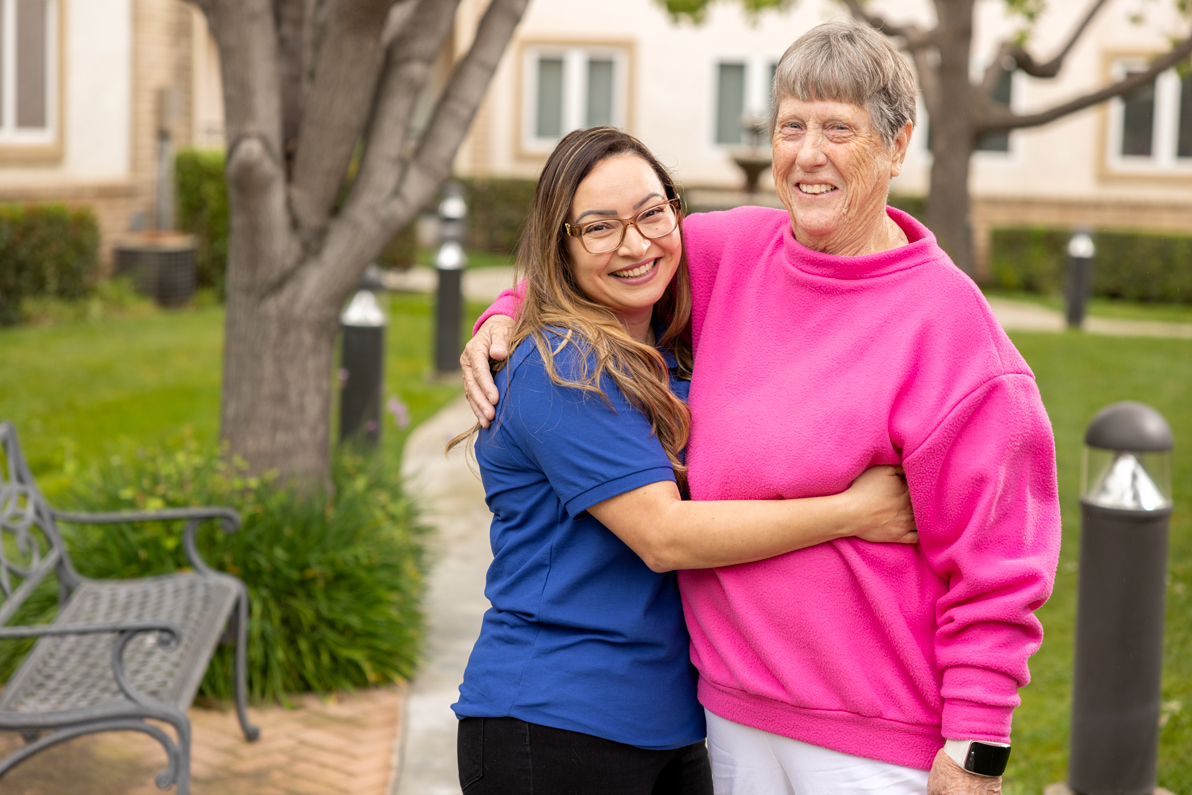
For example, if your loved one seems to have difficulty with home maintenance or daily chores – but is not yet entirely incapable of them – it might be a good time to bring up independent living. Independent living offers all the same benefits of an autonomous life at home but without the daily labor and hassle of yard work or home upkeep. Alternatively, if they are starting to have challenges related to mobility or daily tasks, such as difficulty driving or remembering medication, they may benefit from assisted living. Assisted living also provides an independent, homelike lifestyle but with discreet and consistent support with tasks like these where and when needed.
Proactively discuss the possibility of senior living with your aging loved one. Be sure to do your research ahead of time to provide a foundation of certainty. Begin the discussion process before moving is a necessity. Most importantly, be patient with them and yourself. It is a major life transition, which can be a frightening prospect – especially before they have all the necessary information.